
Discover how dihydroberberine's enhanced bioavailability and metabolic pathway modulation can...
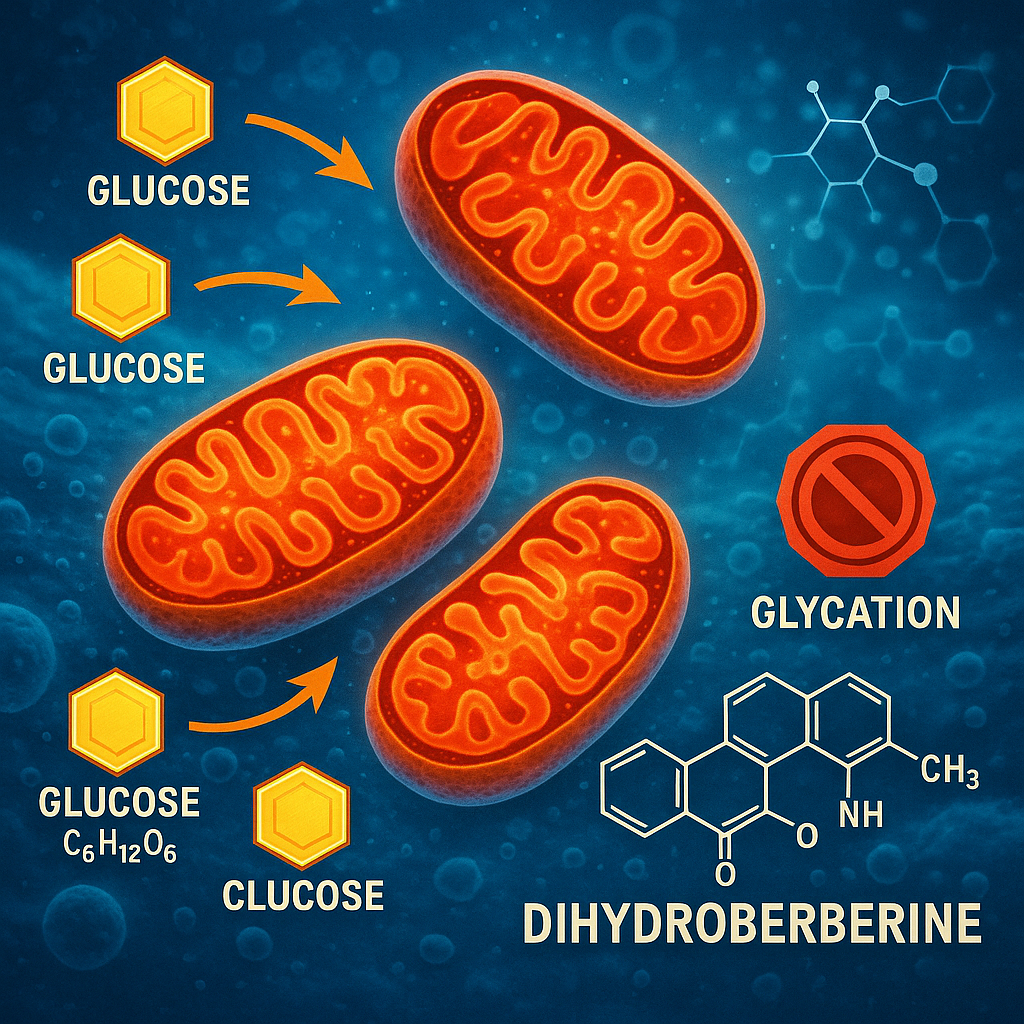
Discover how dihydroberberine's superior bioavailability revolutionizes glucose metabolism control, reduces harmful glycation end-products, and activates critical longevity pathways to support healthy aging and extended lifespan.
The Metabolic Foundation Of Longevity: Why Blood Sugar Control Matters For Healthy Aging
The intersection of metabolic health and longevity represents one of the most promising frontiers in contemporary biotechnology and aging research. Emerging evidence from multiple longitudinal studies demonstrates that maintaining optimal glycemic control throughout the lifespan correlates significantly with reduced all-cause mortality, preserved cognitive function, and diminished incidence of age-related chronic diseases. Dysregulated glucose metabolism initiates a cascade of pathological processes that accelerate biological aging at the cellular, tissue, and systemic levels, making blood sugar regulation a cornerstone of any evidence-based longevity intervention strategy.
Chronic hyperglycemia and insulin resistance create a metabolic environment characterized by oxidative stress, mitochondrial dysfunction, and inflammatory signaling—mechanisms fundamentally incompatible with healthy aging. Elevated blood glucose concentrations increase reactive oxygen species production, impair cellular repair mechanisms, and compromise metabolic flexibility, the capacity to efficiently switch between fuel sources. This metabolic inflexibility becomes increasingly pronounced with advancing age, creating a vicious cycle wherein poor glucose control accelerates aging processes while aging itself impairs glucose homeostasis.
Research published in leading endocrinology and gerontology journals has established that postprandial glucose excursions—the dramatic spikes in blood sugar following meals—may be particularly detrimental to longevity outcomes. These glycemic fluctuations activate pro-inflammatory pathways, induce endothelial dysfunction, and promote protein glycation, a non-enzymatic modification that irreversibly damages structural and functional proteins throughout the body. Advanced glycation end-products (AGEs) accumulate in tissues over time, serving as biomarkers of both metabolic dysfunction and biological aging. Consequently, therapeutic strategies that attenuate postprandial glucose responses and improve overall glycemic variability represent high-value interventions for extending healthspan and potentially lifespan.
Understanding Glycation And Advanced Glycation End-Products: The Hidden Accelerators Of Biological Aging
Glycation represents a spontaneous, non-enzymatic reaction between reducing sugars and amino groups on proteins, lipids, and nucleic acids, resulting in the formation of Schiff bases and Amadori products that subsequently undergo complex rearrangements to form irreversible advanced glycation end-products (AGEs). This process occurs continuously throughout the body but accelerates dramatically in hyperglycemic conditions, making AGE accumulation both a consequence of poor glucose control and a mechanistic driver of accelerated aging. AGEs modify the structure and function of critical proteins including collagen, elastin, albumin, and immunoglobulins, compromising tissue elasticity, enzymatic activity, and cellular signaling.
The pathophysiological consequences of AGE accumulation are extensive and clinically significant. AGEs cross-link collagen fibers in arterial walls, reducing vascular compliance and contributing to arterial stiffness—a independent predictor of cardiovascular mortality. In the extracellular matrix, AGE-modified proteins resist normal proteolytic degradation, leading to abnormal tissue architecture and impaired regenerative capacity. Furthermore, AGEs bind to the receptor for advanced glycation end-products (RAGE), triggering inflammatory cascades involving NF-κB activation, cytokine production, and oxidative stress generation. This AGE-RAGE interaction establishes a feed-forward inflammatory loop that propagates tissue damage across multiple organ systems.
Quantitative measurement of AGEs—including pentosidine, carboxymethyl lysine (CML), and methylglyoxal derivatives—reveals progressive accumulation with chronological age, with accelerated deposition observed in individuals with diabetes, metabolic syndrome, and other conditions characterized by glucose dysregulation. Importantly, AGE levels correlate with functional decline, cognitive impairment, and mortality risk independent of traditional cardiovascular risk factors. Skin autofluorescence, a non-invasive measure of tissue AGE content, predicts cardiovascular events and all-cause mortality in population studies. These findings underscore that limiting glycation through superior glucose control represents a mechanistically sound approach to slowing biological aging and extending healthy lifespan, positioning glucose-modulating compounds as essential components of longevity-focused formulations.
Dihydroberberine Versus Traditional Berberine: Superior Bioavailability For Enhanced Metabolic Efficiency
Traditional berberine, an isoquinoline alkaloid derived from various plant species, has demonstrated considerable glucose-lowering efficacy in clinical trials, exhibiting effects comparable to metformin in some head-to-head comparisons. However, berberine's therapeutic potential has been fundamentally limited by poor oral bioavailability, estimated at less than 1% due to extensive first-pass metabolism, P-glycoprotein efflux, and limited intestinal permeability. This pharmacokinetic constraint necessitates high dosages—typically 1500mg daily divided into multiple administrations—to achieve therapeutic plasma concentrations, creating challenges for patient compliance, gastrointestinal tolerability, and formulation development.
Dihydroberberine (DHB) represents a reduced metabolite of berberine with dramatically enhanced pharmacokinetic properties. Upon oral administration, DHB exhibits substantially greater intestinal absorption compared to berberine due to increased lipophilicity and reduced susceptibility to efflux transporters. Following absorption, DHB undergoes oxidation back to berberine intracellularly, effectively serving as a pro-drug that bypasses the bioavailability limitations of the parent compound. Comparative pharmacokinetic studies demonstrate that DHB achieves berberine plasma concentrations approximately five-fold higher than equivalent doses of berberine, translating to proportionally greater tissue exposure and metabolic activity.
This superior bioavailability profile enables GlucoVantage® dihydroberberine to deliver equivalent or enhanced metabolic benefits at significantly reduced dosages—typically 100-200mg versus 1500mg for standard berberine. Lower effective dosing confers multiple advantages for formulation scientists and end-users: reduced pill burden, improved gastrointestinal tolerance, enhanced capsule compatibility, greater formulation flexibility, and cost optimization. For contract manufacturers and ingredient buyers, the concentrated potency of dihydroberberine simplifies production scaling, reduces raw material volumes, and facilitates incorporation into multi-ingredient longevity formulations where capsule space represents a limiting factor. The pharmacokinetic superiority of DHB thus represents not merely an incremental improvement but a fundamental advancement that enables more effective, practical, and commercially viable glucose-modulating products for the longevity market.
Molecular Mechanisms: How Dihydroberberine Activates AMPK, Supports GLP-1 Signaling, And Promotes Mitochondrial Function
The metabolic and longevity-promoting effects of dihydroberberine operate through multiple complementary molecular pathways, with AMP-activated protein kinase (AMPK) activation representing a primary mechanism of action. AMPK functions as a master metabolic regulator and cellular energy sensor that responds to changes in the AMP:ATP ratio, becoming activated under conditions of energy stress. Upon phosphorylation, AMPK initiates a coordinated metabolic response that includes enhanced glucose uptake via GLUT4 translocation, increased fatty acid oxidation, stimulated mitochondrial biogenesis, and inhibition of anabolic processes including lipogenesis and protein synthesis. This metabolic reprogramming mirrors the beneficial adaptations induced by caloric restriction and exercise—interventions with established longevity-extending effects across multiple species.
Dihydroberberine activates AMPK through mechanisms involving mild mitochondrial inhibition and alteration of cellular energy charge. By modestly reducing ATP production, DHB increases the AMP:ATP ratio, triggering AMPK phosphorylation by upstream kinases including LKB1. Activated AMPK subsequently phosphorylates numerous downstream targets including acetyl-CoA carboxylase (ACC), thereby reducing malonyl-CoA levels and relieving inhibition of carnitine palmitoyltransferase 1 (CPT1), the rate-limiting enzyme for mitochondrial fatty acid oxidation. This metabolic shift promotes substrate utilization and metabolic flexibility. Additionally, AMPK activation stimulates PGC-1α expression, the master regulator of mitochondrial biogenesis, leading to increased mitochondrial density and respiratory capacity—adaptations associated with enhanced healthspan in aging research models.
Beyond AMPK activation, dihydroberberine influences incretin hormone signaling, particularly pathways involving glucagon-like peptide-1 (GLP-1). Emerging evidence suggests that berberine and its metabolites modulate gut microbiota composition and intestinal L-cell function, potentially enhancing endogenous GLP-1 secretion. GLP-1 promotes glucose-dependent insulin secretion, suppresses inappropriate glucagon release, delays gastric emptying, and generates satiety signals—mechanisms that collectively improve postprandial glycemic control. Furthermore, GLP-1 receptor activation in pancreatic beta cells promotes cell survival and function, potentially preserving insulin secretory capacity during aging. The convergence of AMPK activation, enhanced mitochondrial function, and GLP-1 pathway modulation positions dihydroberberine as a multi-targeted metabolic intervention uniquely suited for longevity applications, addressing the interconnected pathologies of glucose dysregulation, mitochondrial decline, and metabolic inflexibility that characterize biological aging.
Integrating Dihydroberberine Into Longevity-Focused Formulations: Clinical Insights And Optimal Dosing Strategies
For formulation scientists, R&D professionals, and brand managers developing longevity-focused dietary supplements, dihydroberberine represents a high-value ingredient with strong scientific rationale, established safety profile, and favorable formulation characteristics. Clinical evidence and mechanistic research support dosing ranges of 100-200mg daily, typically divided into two administrations to maintain consistent plasma exposure and metabolic activity throughout the day. This dosing strategy aligns with the compound's pharmacokinetic profile while remaining practical for consumer compliance and multi-ingredient formulation development. When integrated into comprehensive longevity protocols, dihydroberberine pairs synergistically with complementary ingredients addressing parallel aging mechanisms.
Strategic combinations include pairing dihydroberberine with mitochondrial support compounds such as MitoPrime® ergothioneine, which provides antioxidant protection to mitochondrial DNA and membranes, or with NAD+ precursors like BioNMN® enteric-coated nicotinamide mononucleotide, which supports energy metabolism and SIRT1 activation. The enteric-coated beadlet technology employed in BioNMN® exemplifies advanced delivery platforms that can be extended to other sensitive actives, improving stability and bioavailability—considerations particularly relevant for dihydroberberine formulations targeting premium positioning and maximum efficacy. Formulators should also consider carbohydrate metabolism support through ingredients that enhance insulin sensitivity and glucose disposal, creating multi-targeted metabolic optimization protocols.
From a manufacturing and commercial perspective, dihydroberberine's concentrated potency facilitates inclusion in complex formulations without excessive capsule burden, a common constraint in longevity supplement development where multiple pathways require simultaneous targeting. The ingredient demonstrates good stability under standard storage conditions and compatibility with common excipients, though formulation-specific stability testing remains essential. Brands should emphasize the bioavailability advantage and lower dosing requirements compared to standard berberine when communicating product differentiation to informed consumers and healthcare practitioners. As the longevity and healthspan optimization markets continue expanding, glucose metabolism control through superior bioavailability compounds like GlucoVantage® dihydroberberine positions products at the intersection of mechanistic aging science and practical therapeutic intervention—a positioning increasingly demanded by scientifically literate consumers and longevity-focused practitioners seeking evidence-based approaches to extending healthy lifespan.